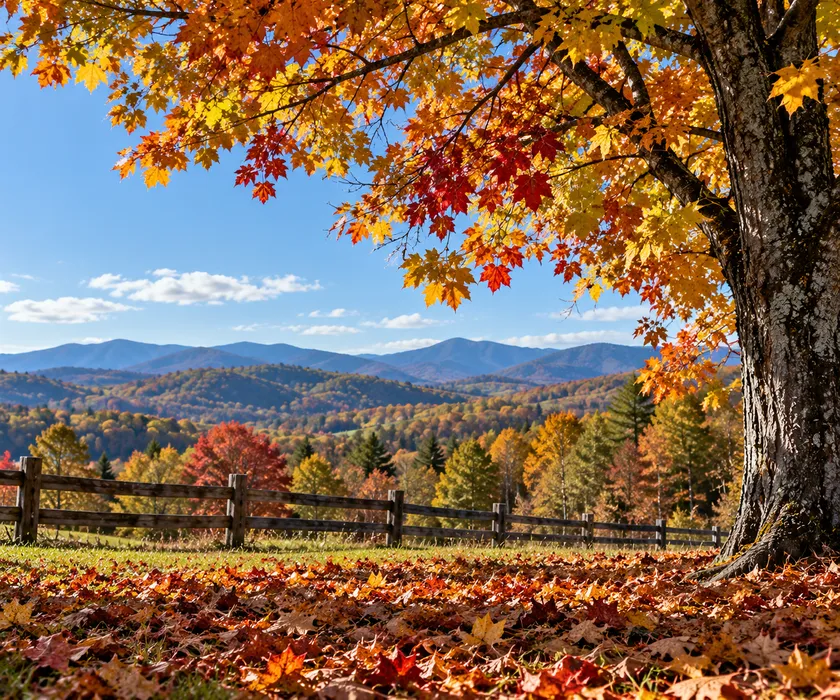
Every autumn, trees across North Carolina put on a spectacular display of yellow, orange, red, and brown foliage. Soon afterward, those leaves fall to the ground. While seasonal leaf drop is a normal part of a tree’s life cycle, leaves can also fall for other reasons—including drought, environmental stress, pests, diseases, and problems with the roots.
According to NC State Extension’s Extension Gardener Handbook, understanding when and how leaves are falling can help determine whether a tree is simply following its normal seasonal cycle or showing signs of trouble.
Seasonal Leaf Drop Is Normal
For deciduous trees, losing leaves in the fall is a normal adaptation to changing environmental conditions. As temperatures and daylight decrease, trees prepare for winter by shutting down processes associated with maintaining their leaves.
The leaf eventually separates from the branch at a specialized structure called an abscission layer. NC State Extension defines abscission as the dropping of leaves, flowers, or fruit, which can occur as part of normal plant growth or in response to external factors.
Deciduous plants typically lose most or all of their leaves over a relatively short period. Evergreen trees and shrubs behave differently: they retain their foliage longer but still replace older leaves or needles over time.
Drought Can Cause Leaves to Fall
Not all leaf drop happens in autumn. Drought is one of the common causes of premature leaf loss.
Trees need a steady supply of water to transport nutrients, maintain leaves, and carry out photosynthesis. During extended dry conditions, a tree may experience water stress. NC State Extension notes that leaf drop is typically associated with drought, while wilting and leaf scorch can also occur when insufficient water reaches the foliage.
Hot, dry weather can be particularly stressful. A tree may shed some of its foliage as a way of reducing the amount of water it needs to maintain.
Premature leaf drop after a particularly dry summer does not necessarily mean the tree is dying. However, repeated or severe drought stress can weaken trees and make them more vulnerable to other problems.
Too Much Water Can Also Cause Problems
It may seem surprising, but too much water can be just as problematic as too little.
Waterlogged or poorly drained soils can damage roots and interfere with the tree's ability to take up water and nutrients. NC State Extension identifies poor drainage, root rot, and other root problems as potential causes of symptoms such as wilting and unhealthy foliage.
In other words, a tree can show signs of water stress even when the soil around it is wet. Healthy roots require oxygen as well as water, so saturated soil can create conditions that interfere with normal root function.
Temperature and Weather Stress
Trees can also lose leaves because of unusual weather. NC State Extension recommends considering recent environmental conditions—including heat, drought, excessive rain, freezing temperatures, wind, and hail—when diagnosing problems with a tree.
Freezing temperatures can injure leaves and stems. In some situations, late freezes can damage newly emerging foliage after an unusually warm period has caused buds to open prematurely.
Wind can contribute to water loss, while extreme heat can cause leaf scorch. Trees growing under stressful environmental conditions may therefore lose leaves earlier than expected.
Pests and Diseases Can Cause Premature Leaf Loss
Sometimes falling leaves are a symptom of a pest or disease problem rather than a normal seasonal process.
NC State Extension emphasizes that insects and pathogens often become problems after a tree has already been weakened by environmental or cultural stress. Potential contributing factors include drought, poor soil conditions, improper watering, root damage, and other stresses.
Certain diseases can directly cause premature defoliation. For example, anthracnose, a group of fungal diseases affecting many hardwood trees, can produce leaf spots, twig dieback, and premature leaf drop. NC State Extension notes that anthracnose can cause trees such as ash and sycamore to lose their leaves early, particularly during cool, wet weather. These trees can often produce new leaves later in the season.
This is why it is important not to assume that every instance of leaf loss is caused by insects or disease—or to assume that the presence of a disease-causing organism is automatically the primary cause of the tree's decline.
Root Problems Can Show Up in the Leaves
Although leaf problems are often easiest to see, the underlying cause may be below ground.
Construction, trenching, soil compaction, transplanting, improper planting depth, and root damage can all affect tree health. NC State Extension explains that some root damage may not become apparent immediately. A tree can appear stable for years before stress eventually becomes visible in its canopy.
That's why diagnosing a tree problem requires looking beyond the leaves. Questions about the tree's watering history, soil conditions, recent construction, planting, pruning, and environmental conditions can provide important clues.
Nutrient Problems May Contribute to Leaf Drop
Nutrient deficiencies can also affect foliage. For example, NC State Extension notes that long-term nitrogen deficiency can result in reduced growth, yellowing foliage, premature fall color, and leaf drop.
However, fertilizer isn't necessarily the solution to yellow or falling leaves. NC State Extension cautions that poor growth can have many causes, including inadequate moisture, poor soil aeration, unfavorable pH, pests, diseases, and environmental stress. Adding fertilizer when the actual problem is something else can make matters worse.
A soil test can help determine whether a nutrient problem actually exists before fertilizer is applied.
Not All Leaf Drop Happens in Fall
One of the most important points for homeowners is that leaf drop isn't always a sign of a problem—and it doesn't always happen in autumn.
Some broadleaf evergreens, including hollies, camellias, and magnolias, naturally shed their oldest leaves in spring as new growth develops. NC State Extension explains that this normal spring leaf drop can sometimes concern gardeners who expect leaves to fall only in autumn.
Even evergreen plants don't keep every leaf indefinitely. Individual leaves age and eventually fall as the plant replaces them.
When Should You Be Concerned?
A few falling leaves aren't necessarily cause for alarm. The pattern and timing of leaf loss are more informative than the mere presence of fallen leaves.
Signs that a tree may be experiencing stress include:
- Leaves changing color or dropping at an unusual time.
- Leaf drop concentrated on particular branches.
- Wilting or leaf scorch.
- Leaves that are unusually small or pale.
- Branch or twig dieback.
- Reduced annual growth.
- A noticeably thinner canopy.
NC State Extension recommends considering the tree's history and growing conditions—including watering, soil drainage, sunlight, weather, recent construction, pruning, and possible pest or disease activity—when investigating these symptoms.
The Bottom Line
Trees lose their leaves for many reasons, and fall leaf drop is usually a normal and healthy part of the life cycle of deciduous trees. But premature or unusually heavy leaf loss can signal stress caused by drought, excessive moisture, temperature extremes, root damage, nutrient problems, insects, or diseases.
The key is to look at the whole tree rather than focusing only on the fallen leaves. By considering the timing of the leaf drop, recent weather, soil and watering conditions, and other symptoms, homeowners can better distinguish normal seasonal changes from signs that a tree needs attention.
For additional guidance, NC State Extension's Extension Gardener Handbook provides extensive information on diagnosing and managing problems in woody plants.