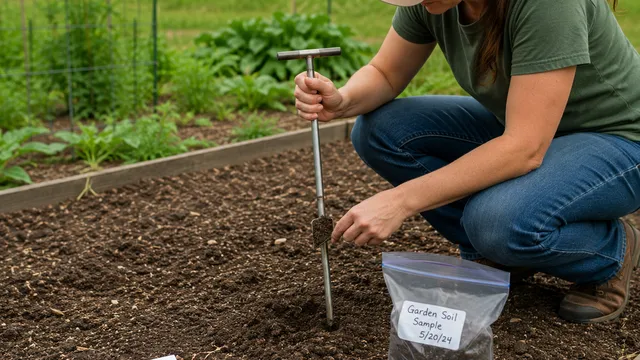
For farmers, gardeners, and landowners in Graham County, fall is an excellent time to take a soil sample. According to NC State Extension, soil testing provides valuable information about soil pH and available nutrients, helping growers make informed decisions about lime and fertilizer applications before the next growing season.
Fall sampling has an important practical advantage: it gives growers time to receive their soil-test results and plan for the coming season. NC State Extension recommends collecting samples three to six months before planting. Sampling soon after harvest in the fall can also mean faster processing because the soil-testing laboratory generally has a lighter workload than it does during the spring planting rush.
A good soil test is only as reliable as the sample submitted. NC State Extension recommends collecting a representative sample rather than relying on soil from a single location. For agricultural fields, about 15 to 20 cores should be taken from random locations within a field or management area and mixed together. Areas with noticeably different soil types, drainage, slopes, or management histories should be sampled separately.
Fall sampling can also help identify potential pest problems. NC State Extension notes that soil sampling for nematodes is particularly useful from late August through November because nematode populations are often highest during this period. The information can help guide management decisions for the following crop.
For Graham County growers, making soil sampling part of the fall routine can pay dividends the following spring. A properly collected sample provides a better picture of soil conditions, helps avoid unnecessary fertilizer or lime applications, and allows time to make informed management decisions before planting. For more information on proper sampling procedures, contact the N.C. Cooperative Extension, Graham County Center at (828) 479-7979 or consult NC State Extension's publication, Careful Soil Sampling—The Key to Reliable Soil Test Information.